
Updated May 8, 2025
Have you ever wondered how long a breathalyzer can tell if someone has had alcohol? The short answer: According to MedicalNewsToday and other scientific sources online, a breathalyzer can detect alcohol use up to 24 hours later.
For most people, the time that they’ll have a detectable level of alcohol on their breath will be significantly shorter — but it’s still important to understand how long alcohol stays on your breath and why. In this article, we’ll dive into how breathalyzers determine if alcohol is present and what factors can affect how long they can detect alcohol in a person’s breath.
How Breathalyzers Work
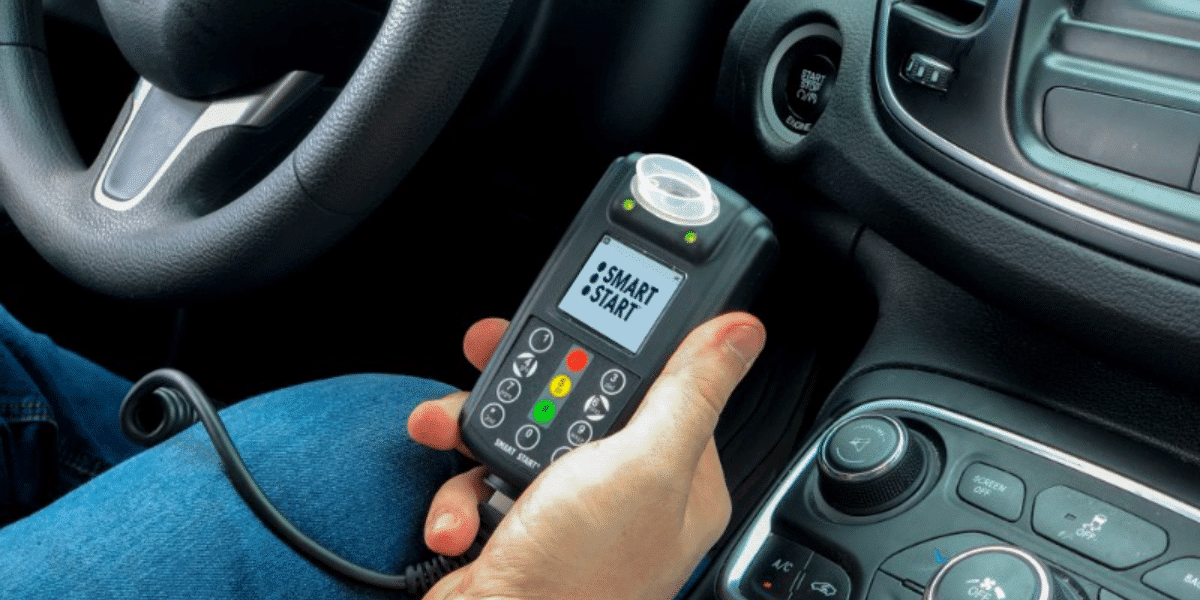
Breathalyzers check for alcohol in a person’s breath, measuring their Breath Alcohol Content (BrAC). They give an idea of the current blood alcohol level without actually drawing their blood. Smart Start uses this technology in our Interlock Devices and portable breathalyzers.
When a person drinks alcohol, it goes into their blood and then into their lungs. When they breathe out, the breathalyzer measures the alcohol level in their breath using one of two technologies: fuel cell sensors or infrared spectroscopy.
With fuel cell sensors, alcohol goes through a special change, making electricity that shows how much alcohol is there. With infrared spectroscopy, the sensor uses light to measure the alcohol. The microprocessor takes the sensor’s data and converts it into its Blood Alcohol Content (BAC) value. To learn more about these technologies, see our guide to how a breathalyzer works.
How Long Can a Breathalyzer Detect Alcohol?
Under certain conditions, alcohol can be detectable for up to 24 hours. In reality, there’s no fast-and-easy answer, because the real answer depends on how long the person’s body takes to reach a 0.0 BAC.
How Long Does It Take to Get to 0.00 BAC?
As soon as you start consuming alcohol, your BAC begins to increase. Eventually, your body will revert to a 0.0 as your body metabolizes or expels the alcohol. How quickly that happens depends on how much you’ve had to drink, plus a lot of other factors.
The alcohol education group Responsibility.org provides some general guidelines on how long it usually takes to reach a 0.0.
- At a low BAC of 0.01-0.03, it could take up to 2 hours to return to 0.0.
- At a moderate BAC of 0.08-0.09, it could take up to 10 hours to return to 0.0. This is the official legal limit for DUI in all 50 states and D.C., although it’s possible to get a DUI at a lower BAC in many states.
- At a high BAC of 0.15-0.19, it could take up to 16 hours to return 0.0.
These are only rough estimates, and the time to process alcohol varies considerably from one person to another. Next, we’ll talk about the reasons why.
How Long Does It Take the Body To Process Alcohol?
It depends on many factors, including your body type, and how much and how fast you drink. To understand how to pass a breathalyzer test, it’s important to know about how breathalyzers work and why results are often different for different people.
According to the National Highway Traffic Safety Administration, these factors all contribute to how quickly your body processes alcohol:
- The amount of alcohol a person has consumed. As we just discussed, the more alcoholic drinks you’ve had, the longer your BAC remains elevated.
- Your height, weight, gender, and age. BAC tends to increase more slowly for taller people, heavier people, younger people, and men.
- How recently you’ve eaten. If someone eats food before or while they drink, it can take alcohol longer to reach the blood and show up on the breathalyzer.
- The speed at which you drink alcohol. The more quickly you drink, the more your BAC will increase in a short time.
One factor you shouldn’t rely on is which type of alcohol you’re drinking. As NHTSA reminds us, “a drink is a drink is a drink.” In other words, a standard bottle or can of beer, a standard glass of wine, and a standard shot of liquor all have approximately the same amount of alcohol — so don’t think you’re safe to drive just because you’ve been drinking beer instead of liquor.
Can I Get a DUI the Next Morning After Drinking?
Yes, people can and do get DUIs after drinking, going to sleep, and then driving home. Remember, it can take as long as 16 or more hours for your BAC to fully reset after a night of heavy drinking. Even going to sleep won’t help you metabolize the alcohol any more quickly. Time is literally the only thing that helps — so, if you’ve got somewhere to be the next day, consider choosing to drink less or not at all.
How Accurate Are Breathalyzers?
Breathalyzers are great at detecting alcohol in a person’s breath. However, the answer to “how accurate are breathalyzers” will depend on regular breathalyzer calibration and maintenance. These devices are fine-tuned for accuracy through calibration, a process Smart Start’s car breathalyzers undergo every 30-90 days, depending on state regulations.
Since breathalyzers are designed to detect alcohol in someone’s breath, it is possible that if you have residue from something like mouthwash left in your mouth, the breathalyzer will detect the alcohol and give you a positive alcohol breath test reading. We recommend you rinse your mouth out with water before every breath alcohol test to make sure there is no food residue. Learn more about things besides alcohol that can trigger an Ignition Interlock here.

Why Choose Smart Start as your Ignition Interlock Provider?
People who have been charged with drinking and driving sometimes need special devices, called Ignition Interlock Devices, to start their cars. These Interlock Devices determine if someone has alcohol in their system before they can drive. This helps people who have been charged with a DUI show that they can drive safely, comply with their program requirements, and keep their driving privileges.
Smart Start takes breathalyzer technology to the next level. For over 30 years as a leading provider of alcohol monitoring technology, like Ignition Interlock Devices and Portable Alcohol Monitoring Devices, we have used state-of-the-art breathalyzer technology to prevent drunk driving incidents. Our sleek and discreet devices provide accurate Breath Alcohol Content (BrAC) readings, helping over 1 million clients stay in compliance for any requirements they may have for keeping their driving privileges.
Do you need an Ignition Interlock Device or a Portable Alcohol Monitoring Device? Our trusted expert Program Advisors can help you get started with just one call at [company_variable name=”Corporate Telephone Number Link”]. Can’t call right now? Fill out our simple online form and our Program Advisors will give you a call back.